Modern interiors lean heavily on simplicity. Open space, pale walls, clean lines, furniture that does its job without drawing attention to itself. It creates order and light, which suits the way many people want to live. But when everything is streamlined, a room can start to feel soulless.
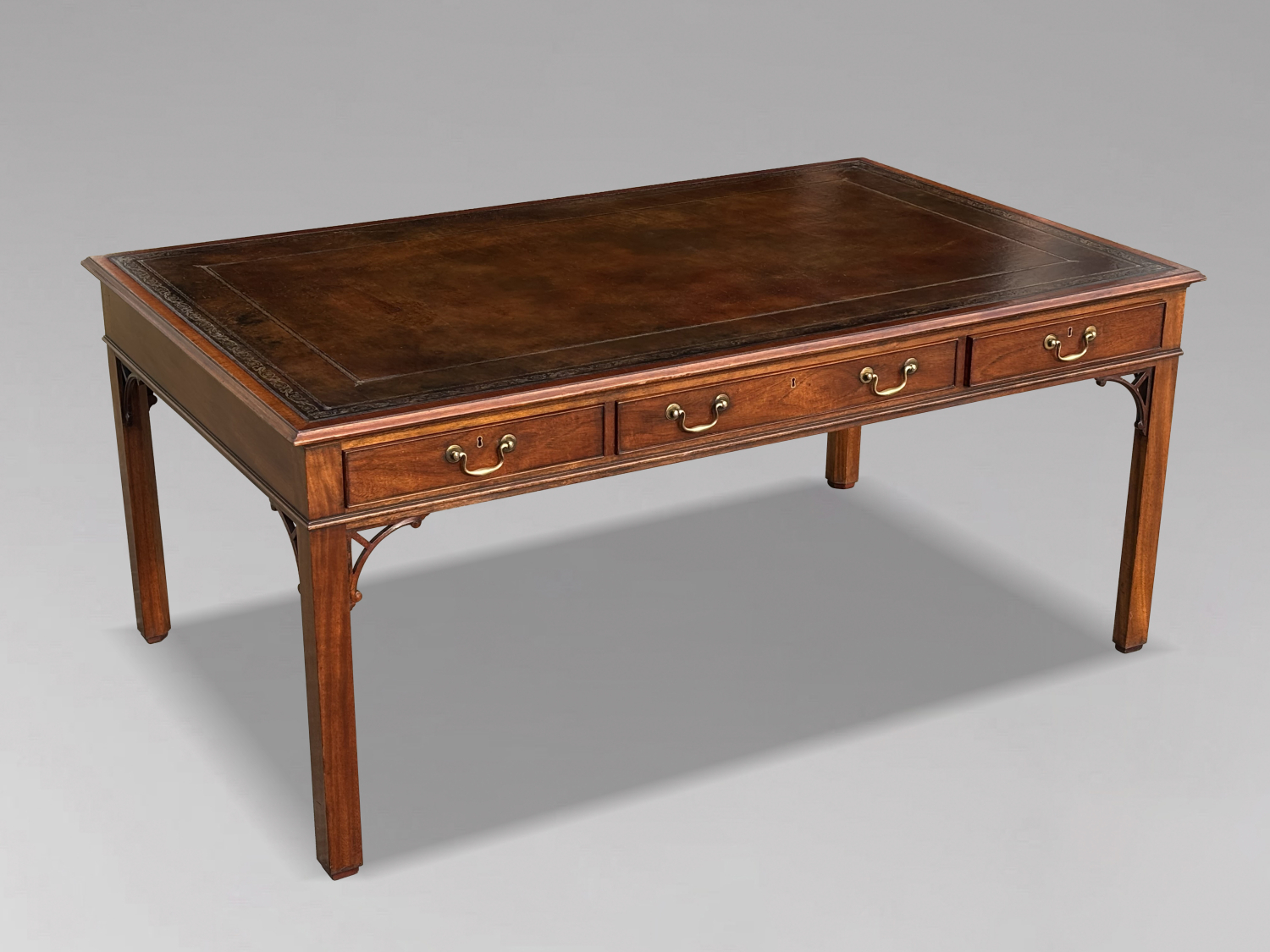
Introducing a period piece can change that feeling. An antique writing desk for instance does not try to blend in. It adds depth and variation with visible signs of age that add to its character, something newer finishes rarely carry. The surface shows gentle wear and the proportions are slightly different from what you see in most modern pieces. Even the way the drawers open - with a bit of weight and resistance - reminds you that it was made with care rather than mass-produced.
Set against a plain wall in a contemporary room, a desk like that doesn’t look out of place. It looks settled. The contrast between old timber and smooth plaster, between shaped legs and straight architectural lines, gives the room a sense of balance and stops the space from feeling too uniform.
You don’t need to surround it with other period pieces or turn the room into something thematic which could weaken the effect. One strong piece is often enough. There’s also something steady about furniture that has already lasted decades. In homes where layouts and tastes change every few years, an antique desk brings a sense of continuity. It suggests that not everything in the room is temporary.
It’s not about creating a statement, but about giving the space a bit of weight. A modern room can feel lighter, sharper, almost transient where a period desk grounds it. It introduces texture and age without cluttering the space. Sometimes a well-placed antique piece does more for a room than a full set of matching furniture ever could.